Superconducting cameras. Single photons. Scalable readout.
I build single-photon cameras, cryogenic readout electronics, and methods for training neural networks on physical hardware at NIST Boulder and the University of Colorado.
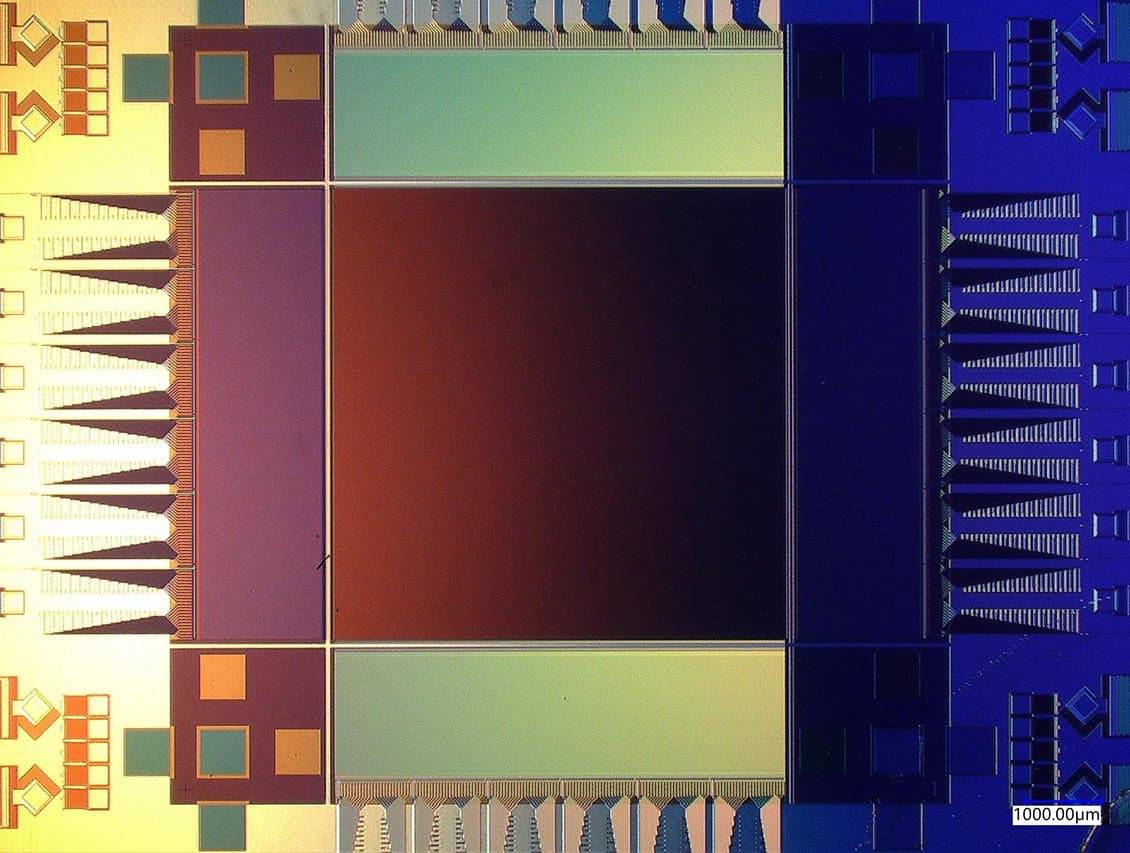
The 400,000-pixel camera die. The dark square at the centre is the detector array; the tapered structures on either side fan out to the shared readout lines. Image credit: Adam McCaughan / NIST, via NASA Astrophysics Technology Update 2024.
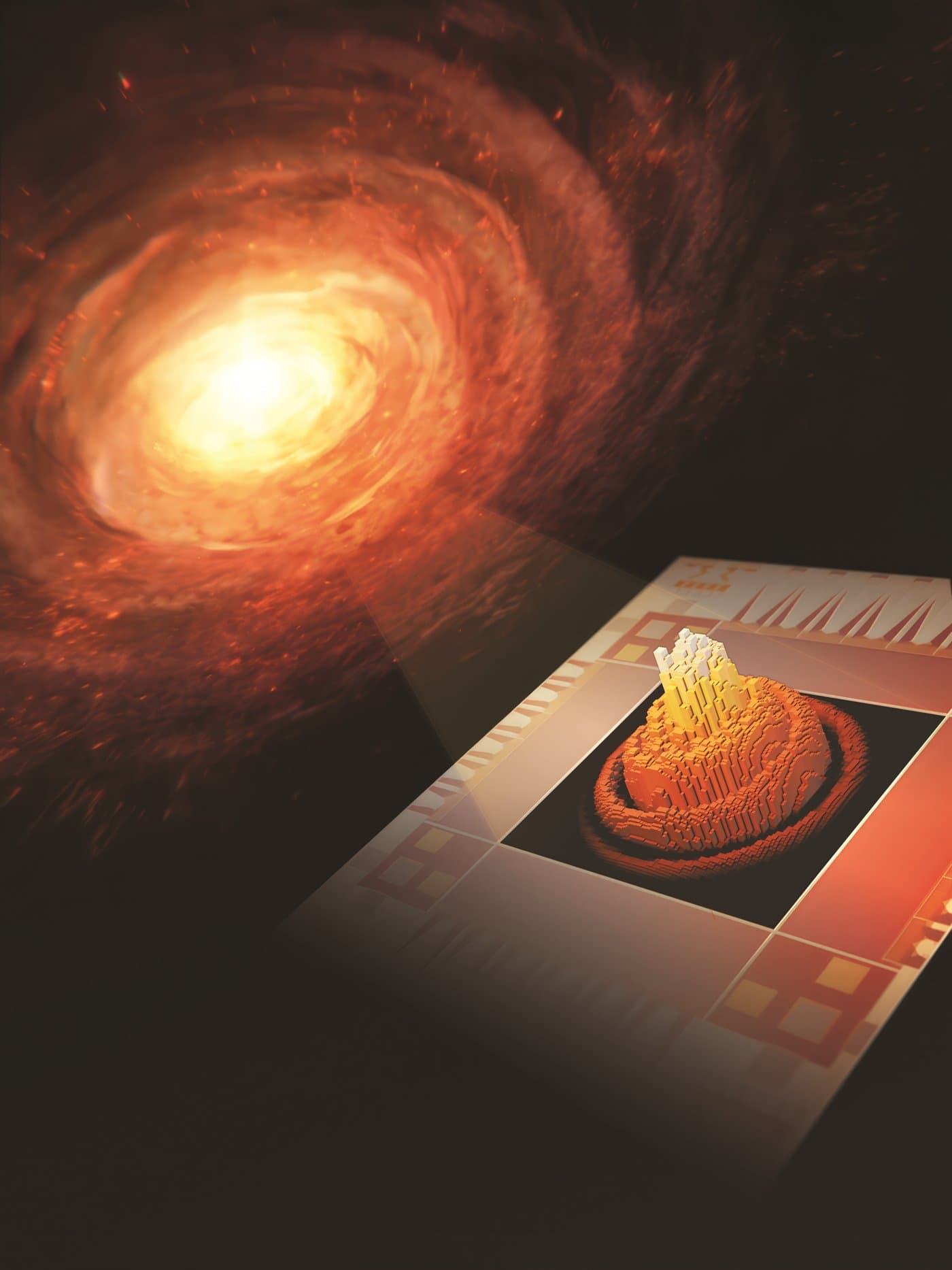
Demonstrates 400,000 imaging pixels, a 400-fold increase over previous SNSPD arrays. Four superconducting buses and eight microwave lines recover photon position from pulse arrival times.
B. G. Oripov, D. S. Rampini, J. P. Allmaras, et al.
Studies how multiplexed gradient descent scales with network size. In the tasks studied, time to reach a target accuracy need not increase linearly with parameter count and can decrease for larger networks.
B. G. Oripov, A. Dienstfrey, A. N. McCaughan, et al.
Pushes single-photon detectors to strips 0.1 mm wide — a thousand times wider than conventional nanowires — while keeping intrinsic detection efficiency, reshaping what geometries large-area detectors can use.
K. M. Parzuchowski, E. Mueller, B. G. Oripov, et al.
In 2023 I led the demonstration of a superconducting nanowire camera with 400,000 pixels — roughly 400 times as many pixels as previous SNSPD arrays. The result came from abandoning per-pixel wiring: photon position is recovered from the arrival times of counter-propagating pulses on a shared readout line, an approach that keeps working as arrays grow. The work was published in Nature and covered widely in the science press.
Before NIST I completed a Ph.D. at the University of Maryland with Steven Anlage, building a near-field magnetic microwave microscope to find defects on superconducting RF cavity surfaces and running time-dependent Ginzburg–Landau simulations of how magnetic vortices nucleate there. I grew up in Tajikistan and studied physics at Boğaziçi University in Istanbul.
Recent talks
Enhancing the count rate and efficiency of a large-scale superconducting-nanowire single photon camera
Applied Superconductivity Conference (ASC)
September 2026
Large SNSPD camera
Applied Superconductivity Conference (ASC)
September 2024
Get in touch
I am always glad to talk about superconducting detectors, cryogenic readout, or scaling hardware that was never meant to scale. Email is the surest way to reach me.